Valve Testing Applications

How the valve type, the size range and the test medium decide which KY series machine a workshop or plant needs.

Application first

The valve decides the machine

Two valve factories can ask for the same nominal bore and need two different machines. A flange-connected gate valve, a wafer butterfly valve and a large-caliber welded power-station valve need different clamping arrangements, different sealing heads and, in the case of gas testing, a different way of loading the valve. That is why the KY series is split into six families rather than one machine with options.

The application also decides the control level. A workshop checking a few valves a day needs a reliable bench with a calibrated gauge and a record sheet. A production line testing every unit needs repeatable clamping, a stable pressure hold and a result that can be stored or printed — which is what the optional computerised test-data management package on a KY machine provides.

Kangyuan Fluid Control (Zhejiang) Co., Ltd states that its equipment serves valve manufacturers, petrochemical plants, natural gas engineering, power plants and water supply and drainage, and that its machines are in use in the USA, Germany, Canada, Spain, the Netherlands, the UAE, Japan, South Korea, Indonesia and Taiwan region.

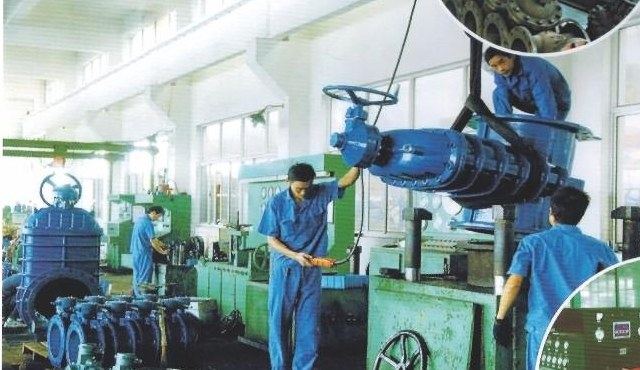
Large-caliber valve being lifted by crane for pressure testing at a customer's works
Industries

Where the KY series is used

The same machine families are configured differently for each sector, because the valve mix, the batch size and the record the customer expects are different.

Valve manufacturers

Gate, globe, check and butterfly valves tested at the end of the line, often every unit. Clamping speed and a repeatable seat test matter most, and the KY series hydraulic valve test bench covers DN15 to DN1000 across the KY-100 to KY-1000 models so one machine can take a mixed size range.

Petrochemical plants

Valves tested after maintenance and before installation, in several materials and pressure classes. The shell test and the seat test in the direction your specification requires matter most, and the pressure is held against the acceptance criteria in your procedure rather than a fixed figure.

Natural gas engineering

Valves that have to be proven on gas as well as on water. The KY-Z immersed bench is built for this: the clamping table lowers the valve into the water pool and can turn it through 90°, which is the arrangement gas-pressure seat testing needs, while the KY bench itself runs on water, air or kerosene.

Power plants

Large-caliber welded and threaded power-station valves, which is what the KY-A series (KY-A/100 to KY-A/800, DN15-100 up to DN400-800) is designed for, with an oil pump working pressure of 0-6.3 MPa and an oil cylinder rated to 31.5 MPa. Butterfly valves on water circuits go on the KY-T series.

Water supply and drainage

Gate, butterfly and check valves, usually soft-seated and often in larger sizes. Shell and seat pressure testing is the routine requirement, and the KY-T butterfly valve test bench covers flanged and wafer valves up to the KY-T2000 model.

Which family fits your sector

Send the valve types you handle, the size range and the test medium. We will name the KY series family and model for the job — bench, immersed bench, power-station bench, butterfly bench or vertical machine — and say which standard the machine has to reach and hold for your specification.

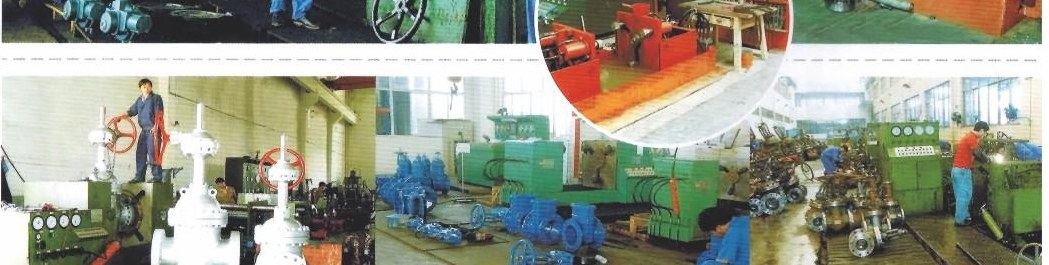
Wide view of a valve pressure testing workshop with test benches along the bay

A valve pressure testing workshop laid out around KY series benches.

Valve types

Valve types and what is tested

Each valve design loads its seats and its body differently during a pressure test. These points usually decide which KY series family is quoted.

Valve types, the test that matters, what the machine must provide and the KY series family that covers it. The final specification is confirmed in the technical proposal for your valve.
Valve type Typical test What the machine must do KY series family Note
Gate valve, flange-connected Shell test, then seat test on each side Seal both ports on the flange end face and reverse the pressure without unclamping KY series hydraulic valve test bench (KY-100 to KY-1000) Excessive clamping force can push a solid wedge into its seat
Globe valve Shell test with the disc open, then seat tightness in the flow direction Seal both flange faces and keep the disc clear of the seat KY bench, or KY-B vertical machine for heavy bodies Metal seats need an agreed leakage allowance, not bubble-tightness
Check valve Reverse-flow seat test with the disc closed Apply pressure from the outlet end, which must be sealed and reachable KY bench, or KY-B vertical machine The sealing direction is opposite to normal flow, which many simple rigs cannot reach
Butterfly valve, flanged or wafer Shell and seat test with the disc closed, plus disc opening and closing and electric actuator torque where required Clamp a wafer or lug body evenly with synchronous clamp jaws and control the clamping force KY-T series hydraulic butterfly valve test bench (KY-T300 to KY-T2000) Over-clamping distorts a resilient seat and creates leakage the valve does not have
Power-station valve, welded or threaded Shell and seat test at high pressure Reach high pressure in a rigid frame; oil pump 0-6.3 MPa, oil cylinder to 31.5 MPa KY-A series large-caliber power-station valve test bench (KY-A/100 to KY-A/800) High pressure on large bodies changes the sealing and guarding provisions
Small-caliber valves in batches Shell and seat checks, valve after valve Quick clamping on a compact unit that fits a small bay KY-Z series combined small-caliber immersed test bench Throughput and changeover time decide the machine more than maximum pressure
Valves tested on air or gas Seat tightness on air or gas, by immersion or pressure decay Lower the workpiece into a water pool and turn it through 90° during the test KY-Z series immersed hydraulic valve test bench The valve must be sealed on the flange end face so clamping does not affect the result
Standards

The standards KANGYUAN states it works to

Buyers rarely specify a machine. They specify a standard the valve must be tested to, and the machine has to be able to carry that test out.

  • GB/T13927-92 — General valve pressure test, the Chinese standard the company states it works to
  • API 598 — valve inspection and test
  • ISO 9000 — quality management system
  • and other relevant standards

These standards belong to your contract and your end user, not to our machine. KANGYUAN configures the machine to reach and hold the required pressures, to apply the test in the direction the standard requires and to record the result — with the optional computerised test-data management package where a written record is needed. We do not certify valves and we do not issue valve test certificates — your own inspection or the third-party body your customer nominates does that, against the acceptance criteria in your specification.

Choosing a machine

Choosing between the six KY series families

The valve type, the size range and the test medium usually decide the family. The control level is chosen separately.

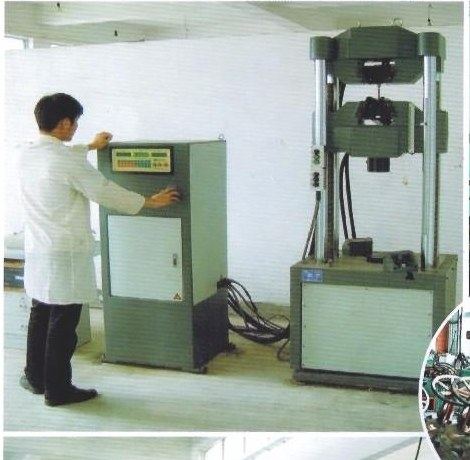
Operator running a vertical hydraulic valve test machine at a customer's works

Compare the full product range

Talk to us about your application

Tell us the valve types, the size range, the test pressures and the standard your customer quotes, and we will recommend the KY series machine that fits the work.

Request a quotation kangyuangroup@gmail.com WhatsApp +86 187 5776 5223